Countdown to COP31 in Antalya: “The Stakes Are Not Abstract”
COP31 opens in Antalya, Türkiye, on November 9 with a major challenge: turning years of climate commitments into concrete action. Electrification, finance, adaptation and resilience will shape a summit aimed at closing the gap between ambition and action on the ground.

COP31—the 31st Conference of the Parties to the United Nations Framework Convention on Climate Change—will be held under a partnership between Türkiye and Australia at a time when, as its organizers put it, “the stakes are not abstract.” Murat Kurum, Türkiye’s Minister of Environment, Urbanization and Climate Change and COP31 President-Designate, and Chris Bowen, Australia’s Minister for Climate Change and Energy and COP31 President of Negotiations, made that point in the fourth Presidency letter. They specifically point to “extreme heat, drought, wildfire, glacial retreat, rising seas and coastal erosion.”
Ahead of COP31 in Antalya from November 9 to 20, Pacific Pre-COP meetings were held in Fiji and Tuvalu in early October. They produced the Taku Pakasoa Declaration, which highlights “the importance of international cooperation and collective climate action, with a focus on the 1.5°C goal, climate finance, resilience and ocean protection.”
What COP31 will focus on
With the emphasis on accelerating implementation through cooperation and collective action, debate and negotiations in Antalya will focus on:
- Accelerating electrification as a key mitigation lever. Electrification is now a top priority, and COP31 will seek to secure a global commitment to raise electricity’s share of final energy consumption to 35% by 2035 under the 35 by 35 Global Electrification Pledge. The Presidency says large-scale deployment of clean technologies, or cleantech, is the most direct and cost-effective way to “cut emissions, strengthen energy security and lower costs.”
- Driving real-world implementation through the Climate Implementation Bridge. Rather than focusing solely on drafting national climate plans, COP31 will prioritize turning those commitments into investment roadmaps. Through this mechanism, Parties will work to overcome barriers to building bankable, investment-ready project pipelines in residential, industrial and transport infrastructure. The Presidency is explicit that this is not a new climate fund, but a regulatory and technical platform designed to connect national priorities with sources of finance.
- Aligning the global financial system and implementing Article 2.1(c). Following the adoption of the New Collective Quantified Goal (NCQG) at previous summits, negotiators in Antalya will look at how to scale transition finance and operationalize Article 2.1(c) of the Paris Agreement. The aim is to coordinate public and private capital flows and steer them toward climate-resilient activities, so that climate finance commitments benefit developing countries and Small Island Developing States.
- Resilience, adaptation and the Belém-Addis Vision. The summit will seek to operationalize the Belém-Addis Vision on Adaptation and define the methodology for global resilience indicators. It will also address implementation of the first funding requests under the Fund for Responding to Loss and Damage for communities exposed to severe climate impacts.
- Oceans and climate resilience. In response to calls made during preparatory meetings in Tuvalu and Fiji, COP31 will bring ocean protection onto the agenda, recognizing the role of seas and oceans as regulators of the global climate system. Türkiye has confirmed that it will work during the summit negotiations to secure adoption of a formal resolution—the Antalya Ocean Declaration—to advance nature-based solutions and strengthen marine ecosystems.
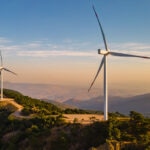
From paper to action: structuring projects for investment
To make the Climate Implementation Bridge work in practice, countries need to go beyond simply updating their Nationally Determined Contributions (NDCs) and National Adaptation Plans (NAPs). As the joint Presidency stresses in its fourth official letter, the urgent priority is to “make any overshoot as low and short as possible, cutting emissions faster.”
Against this backdrop, stable regulatory environments are a prerequisite for unlocking private capital at scale. The Antalya agenda aims to encourage national governments and multilateral development banks to standardize regulatory frameworks that reduce legal uncertainty for international investors. This will make it easier to structure financing for projects in critical areas such as energy storage, water efficiency and urban renovation that reduces buildings’ energy consumption, emissions and climate vulnerability.
Electrification and technology
The focus on electrifying demand reflects the technological maturity and economic competitiveness of renewable energy. As reflected in the fourth Presidency letter cited above, COP31 delegations are explicitly calling for countries to “rapidly electrify end-uses across our economies” and “accelerate deployment of clean energy” in strategic areas such as transport, buildings and heavy industry.
In remarks to the World Meteorological Organization (WMO), representatives of the organizing committee said clean infrastructure must be integrated with advanced weather observation systems and smart grids to ensure reliable supply in the face of adverse climate events. Meanwhile, the latest analyses from the United Nations Environment Programme (UNEP) stress that rapid decarbonization of the power mix is the key requirement for returning to safe temperature pathways after temporarily overshooting the 1.5°C threshold.
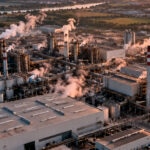
Adaptation and resilience to extreme physical climate risks
Alongside decarbonization, managing physical climate risks will be a central focus of discussions in Antalya. In its fourth letter, the Presidency underscores the non-negotiable need for “strengthening resilience and adaptation, and supporting communities already confronting loss and damage.”
As UN leaders have stressed, “temperature overshoot is not a reason to give up.” The point is that temporarily exceeding 1.5°C requires a major increase in adaptation investment and faster emissions cuts to return temperatures to safer levels, rather than simply accepting the consequences of climate change.
Strategic implications for the financial and institutional sectors
For banks and other institutions, COP31 will focus on how existing climate commitments can be translated into implementation, finance and investment. Key topics will include:
- Mobilizing finance and transition policies. The Transformational Finance for Climate Group will present its position paper on overcoming investment barriers, while the Taskforce on Net Zero Policy will launch a report assessing progress on sustainable finance policies across the G20.
- Accelerating sectoral and institutional transition plans. Dedicated sessions will focus on accelerating the adoption of transition plans by financial institutions and on developing tailored financing solutions for building renovation, co-organized with the Interministerial Council on Buildings and Climate (ICBC), the Global Alliance for Buildings and Construction (GlobalABC) and 30 global banks.
- Risk management, resilience and adaptation. The COP31 Global Sustainable Insurance Summit, convened with UNEP and the Insurance Association of Türkiye, will explore how insurance can strengthen economic resilience, and events with the Monetary Authority of Singapore will help advance climate adaptation across ASEAN.
With COP31 just days away, the message from the joint Presidency appears clear: the gap between ambition and implementation must close, and electrification is no longer simply a tool for the energy transition—it is a priority for accelerating climate action.

Frequently asked questions about COP31
When and where will COP31 take place?
COP31 will be held in Antalya, Türkiye, from November 9 to 20, 2026. The UN climate summit is being led jointly by Türkiye and Australia, which are working together on its organization and negotiations.
What are the main topics at COP31?
COP31 will focus on five priorities: accelerating electrification, turning climate commitments into bankable projects, mobilizing public and private finance, strengthening climate adaptation and protecting oceans.
What is COP31’s 35 by 35 pledge?
The 35 by 35 pledge is an initiative to increase electricity’s share of global final energy consumption to 35% by 2035. Its aim is to accelerate the use of clean technologies in sectors such as transportation, buildings and industry.
What is the Climate Implementation Bridge and what does it do?
The Climate Implementation Bridge is a platform designed to turn national climate plans into viable, investment-ready projects. It aims to overcome regulatory and technical barriers and connect countries’ priorities with sources of finance. It is not a new climate fund.
What role does climate finance play at COP31?
Climate finance is one of COP31’s priorities. The negotiations aim to facilitate the flow of public and private capital into transition and adaptation projects, with particular attention to developing countries and Small Island Developing States.
How will COP31 address climate adaptation and resilience?
COP31 will address implementation of the Belém-Addis Vision on Adaptation, the development of global resilience indicators and access to resources from the Fund for Responding to Loss and Damage. It will also cover the protection of oceans and of communities exposed to extreme weather events.